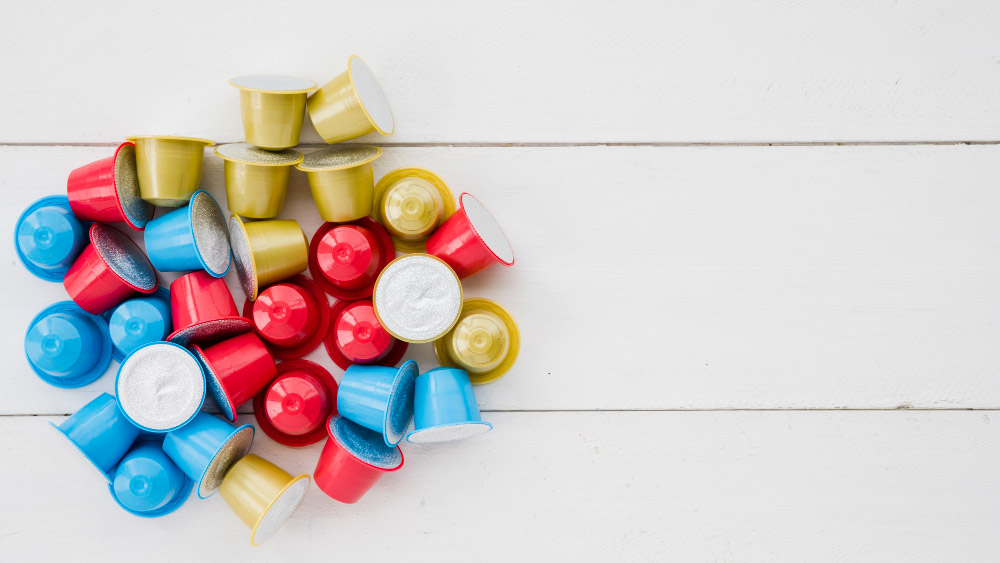
A Dutch project has successfully developed home-compostable coffee capsules compatible with Nespresso-style systems, but the solution is unlikely to reach commercialization. The Clean Cups project, involving Dutch companies including Euro Caps, M-Plastics and Hemcell, was created to explore a compostable alternative to conventional coffee capsules, a packaging format that remains difficult to manage at end of life.
The project is interesting precisely because it does not tell the usual story of a technical failure. On the contrary, the development work appears to have achieved its goal: creating a capsule that combines functionality, machine compatibility and compostability. Yet market and regulatory conditions are not currently favourable enough to support a commercial launch.
This makes Clean Cups a useful case study for the packaging industry. Compostable packaging is often presented as an intuitive solution, especially when the product contains organic residue, as in the case of coffee capsules. In theory, a compostable capsule could allow both the packaging and the coffee grounds to follow the same biological end-of-life route.
In practice, however, compostability only delivers value when the surrounding system is ready. Consumers need clear disposal instructions, waste management operators need to accept the material, composting infrastructure must be available, and regulation must recognize composting as an appropriate route for that specific application. Without this alignment, a compostable pack risks remaining a technically valid solution without a scalable market.
The case also highlights a broader issue for bioplastics and compostable materials. Sustainability is no longer only a matter of material performance. It depends on whether that material can fit into real collection, sorting and treatment systems. A capsule can be home-compostable in design, but its commercial viability still depends on local rules, consumer behaviour and the confidence of brands and retailers.
For this reason, Clean Cups should not be read as evidence that compostable capsules have no future. Rather, it shows that the future of compostable packaging will be selective and application-specific. The right material is not enough; the right infrastructure and regulatory framework are just as important.
In the context of the European packaging transition, this is a timely reminder. Innovation can solve part of the problem, but scalability depends on the wider system. Clean Cups seems to have answered the technical question. The market question remains open.