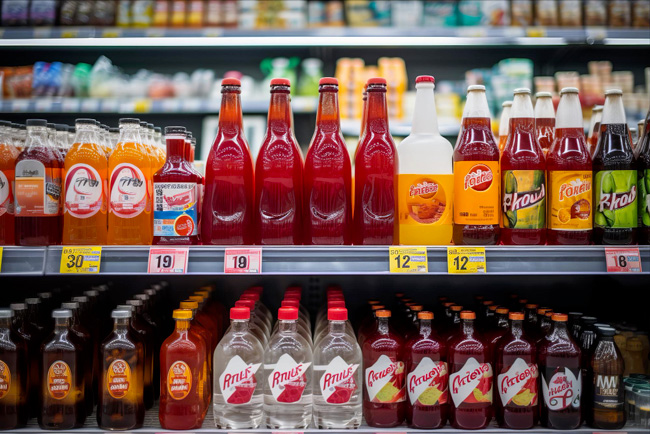
The non-alcoholic beverage market has rarely been as dynamic as it is today. Traditional categories are expanding into functional drinks, enhanced waters, protein beverages, botanical formulations, low- and no-alcohol alternatives and products that increasingly sit somewhere between refreshment, nutrition and wellness. As a result, consumers are no longer simply choosing between different flavours or brands, but between a growing number of promises related to energy, hydration, health, performance, sustainability and lifestyle.
This abundance of innovation creates opportunity, but it also creates a much more difficult competitive environment. As more brands enter similar spaces and many product claims begin to overlap, differentiation becomes harder to achieve through formulation alone. According to recent insights from GlobalData, packaging is consequently assuming a more strategic role in the global non-alcoholic beverages market, becoming one of the elements through which brands can distinguish themselves in increasingly crowded categories.
This shift deserves attention because it changes the way beverage packaging should be understood. Packaging is no longer simply the final layer added to a product once its formulation and positioning have already been defined. Increasingly, it contributes to that positioning from the beginning, influencing how the product is perceived, how quickly its proposition is understood and, ultimately, whether it succeeds in attracting attention before the consumer has had any opportunity to judge what is inside.
A more complex beverage market requires a more intelligent pack
The communication challenge is particularly evident in functional beverages, where a single product may need to explain several benefits at the same time. A drink can contain vitamins, electrolytes, protein, botanical extracts or other functional ingredients while also claiming reduced sugar, convenience, naturalness or specific sustainability credentials. All of these messages compete for limited space on the pack and for an even more limited amount of consumer attention.
In this context, packaging becomes a point of synthesis between the complexity of the formulation and the simplicity required at the moment of purchase. Material, format, shape, closure, graphics and information hierarchy all contribute to explaining what the beverage is and how it should be perceived. An unfamiliar product category can become more accessible through a recognisable format, while a distinctive structure or dispensing system can signal innovation before the consumer reads a single claim.
This is why the role of packaging is gradually moving beyond traditional ideas of shelf impact. The most effective packs are not necessarily those that attract attention through visual disruption alone, but those that make the product proposition immediately coherent. A premium formulation presented in an undifferentiated pack may struggle to justify its positioning, just as an innovative format can lose relevance if consumers do not understand the benefit it offers.
Differentiation is increasingly built into the format itself
For many beverage brands, packaging differentiation has historically been associated primarily with visual identity, including colour, typography, graphics and label design. Those elements remain fundamental, but the competitive potential of packaging increasingly extends to structural design and functionality.
A resealable closure can enable different consumption occasions, while a lightweight format can reinforce portability and convenience. A smaller portion can reposition a drink around concentration or performance, just as a distinctive bottle or can shape can help establish recognition independently of graphic branding. In these cases, packaging is not simply communicating a pre-existing product strategy; it becomes part of that strategy.
This distinction is particularly relevant in fast-moving segments where product innovations can quickly become category conventions. Ingredients that initially create novelty can eventually become expected, and claims that once distinguished a brand can soon be replicated across an entire shelf. When this happens, differentiation must increasingly be found in the complete consumer experience, and packaging is one of the few elements capable of influencing that experience before, during and after consumption.
The strategic value of packaging therefore lies not only in attracting attention but in connecting product, brand and usage occasion in a way that is difficult to reproduce through formulation alone.
Sustainability changes the competitive equation
At the same time, sustainability is making beverage packaging differentiation more complex rather than less important. Brands are under growing pressure to reduce material use, improve recyclability, incorporate recycled content and respond to regulatory requirements that increasingly favour circularity and resource efficiency. This is reshaping material choices and packaging formats across the sector, but it is also changing the language brands use to communicate with consumers.
The challenge is that sustainability claims themselves risk becoming less distinctive as they become more common. Recyclability, recycled content and lower-impact materials are increasingly expected rather than exceptional, which means that environmental performance may gradually become a basic requirement instead of a unique selling point.
For packaging developers, this creates a delicate balance. A sustainable solution must still perform operationally, protect the product, work efficiently throughout the supply chain and remain convenient for consumers, while also preserving enough visual and structural identity to support the brand. Environmental improvement cannot therefore be treated as an isolated feature; it has to coexist with functionality, recognition and commercial appeal.
This is perhaps where the most interesting packaging innovation is likely to emerge. The strongest solutions will not simply look sustainable or communicate sustainability more loudly, but will integrate environmental performance into a format that also improves use, simplifies communication or strengthens brand identity.
From container to competitive asset
Seen from this perspective, packaging occupies a particularly valuable position within the beverage business. It is simultaneously a physical container, a branding surface, a communication tool, a logistical component and an interface between the product and the consumer. Few other elements of the value proposition have to perform so many functions at once.
This explains why packaging decisions are becoming increasingly strategic. If a beverage brand waits until the end of the development process to consider the pack, it risks treating one of its most visible competitive assets as a secondary consideration. By contrast, brands that develop product and packaging together have a greater opportunity to create coherence between formulation, positioning, functionality and consumer experience.
The change is subtle but important. Rather than asking which package best suits an already defined beverage, companies may increasingly need to ask what kind of experience they want to create and which packaging format can help deliver it.
When innovation becomes the new normal
There is, however, a further challenge. As more beverage brands recognise the strategic value of packaging, some of the visual codes associated with innovation are themselves becoming familiar. Minimalist graphics, bold typography, matte finishes, aluminium formats and highly simplified front-of-pack communication have become increasingly common across emerging beverage categories, particularly in premium and functional segments.
The risk is that brands pursue differentiation by adopting the same design language as their competitors. What appears disruptive in isolation can quickly become conventional when repeated across an entire category.
For this reason, the future of beverage packaging may depend less on novelty for its own sake and more on relevance. The most successful packs are likely to be those in which format, material, design and functionality support a clear product proposition rather than simply following current aesthetic trends.
GlobalData’s observation that packaging is becoming a strategic differentiator in the non-alcoholic beverages market therefore points to a broader shift. As formulations become more sophisticated, categories more crowded and sustainability requirements more demanding, packaging is being asked to do significantly more than contain and protect the product.
It has to explain it, position it, make it recognisable and create an experience that consumers can remember. In a market where many beverages increasingly compete around similar benefits and ingredients, that ability may become one of the most valuable forms of differentiation available to a brand.