The packaging industry has spent years trying to solve recyclability, now it faces a more difficult challenge: proving that recycling actually works. Designing packaging that can enter recycling streams is only one part of a circular economy. The next step is ensuring that recycled materials can successfully return to new packaging applications without compromising performance, safety or manufacturing efficiency.
This challenge is becoming increasingly relevant as regulations such as the EU’s Packaging and Packaging Waste Regulation (PPWR) move closer to implementation and recycled-content targets shift from future ambitions to operational requirements.
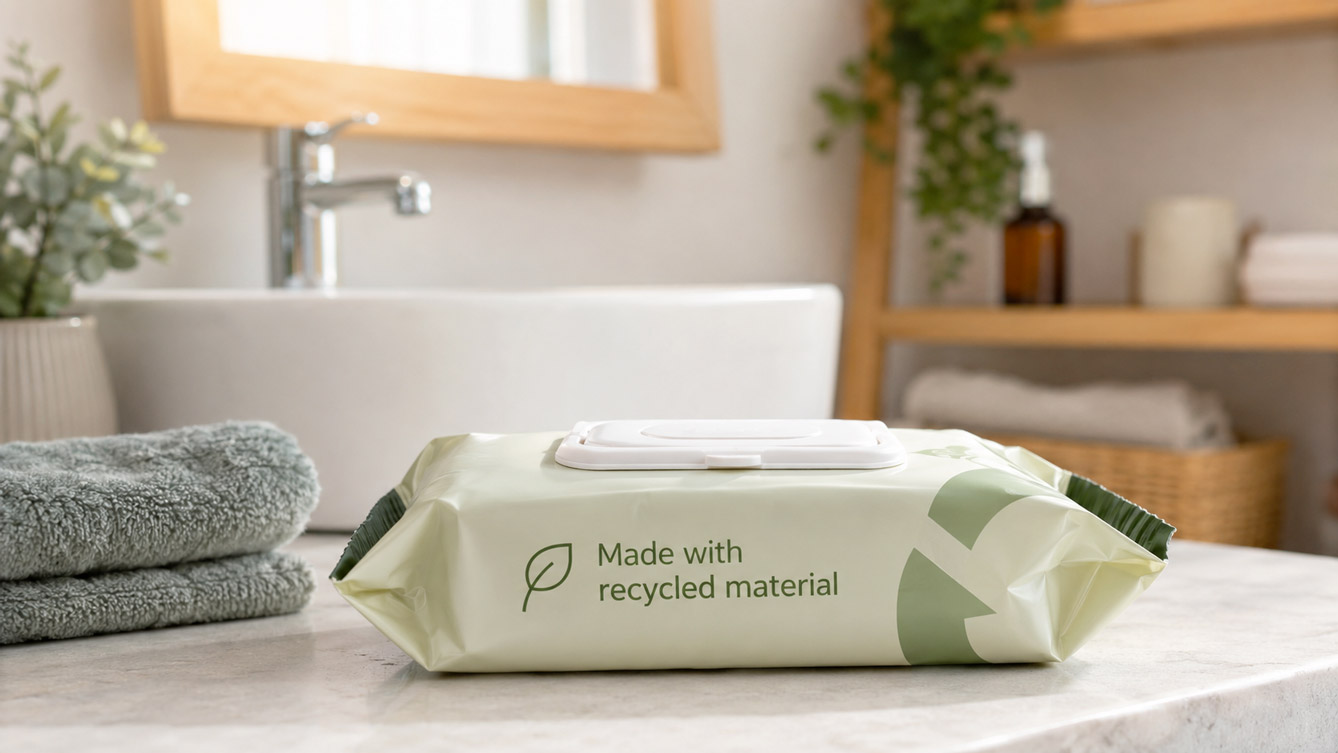
Recent developments from Mondi provide a clear example of this transition. The company has introduced re/cycle FlowWrap, a flexible packaging solution for wet wipes containing 35% post-consumer recycled (PCR) content. According to the company, the packaging maintains the sealing, protection and processing characteristics required for demanding personal care applications while supporting future circularity objectives.
While the product itself is noteworthy, the broader significance lies elsewhere. The packaging industry is entering a new phase where success will increasingly be measured not only by whether packaging can be recycled, but also by how effectively recycled materials can be brought back into packaging systems.
Recycled content becomes the next packaging challenge
For much of the past decade, packaging innovation has focused on improving recyclability. Mono-material structures, design-for-recycling principles and investments in collection and sorting infrastructure have become central pillars of sustainability strategies across the industry.
However, regulators are increasingly turning their attention to what happens after packaging is collected and processed. The logic is straightforward: recycling systems only become truly circular when recovered materials can successfully return to new products and packaging applications.
This is one of the reasons why recycled-content requirements are becoming a growing feature of packaging regulation, particularly in Europe. Under the PPWR framework, several packaging categories will be required to incorporate minimum levels of post-consumer recycled content over the coming years.
As a result, packaging manufacturers are being challenged to demonstrate not only recyclability, but also the practical integration of recycled materials at industrial scale.
Flexible packaging faces a particularly complex transition
The challenge is especially significant in flexible packaging. Applications such as wet wipes, personal care products and household goods require precise performance characteristics, including sealing integrity, barrier protection and efficient machinability on high-speed production lines.
Historically, achieving these requirements with recycled polymers has proven more difficult than with virgin materials. Variability in recycled feedstocks can create challenges relating to consistency, aesthetics and technical performance.
This is why developments such as Mondi’s re/cycle FlowWrap are attracting attention within the industry. They reflect growing efforts to demonstrate that meaningful levels of recycled content can be incorporated without compromising the functionality expected from modern packaging systems.
For converters and brand owners alike, this represents one of the most important tests facing circular packaging today.
Closing the loop becomes the industry’s next objective
The broader significance of this trend extends far beyond a single packaging format.
For years, the industry’s sustainability narrative has focused on making packaging recyclable. Increasingly, however, the conversation is shifting toward ensuring that recycled materials can flow back into the packaging economy in a reliable and commercially viable way.
In many respects, this represents the difference between designing for circularity and actually achieving it. As recycled-content targets expand and regulatory expectations continue to rise, packaging companies may find that the next phase of innovation is less about creating packaging that can enter the loop and more about creating packaging that helps close it.