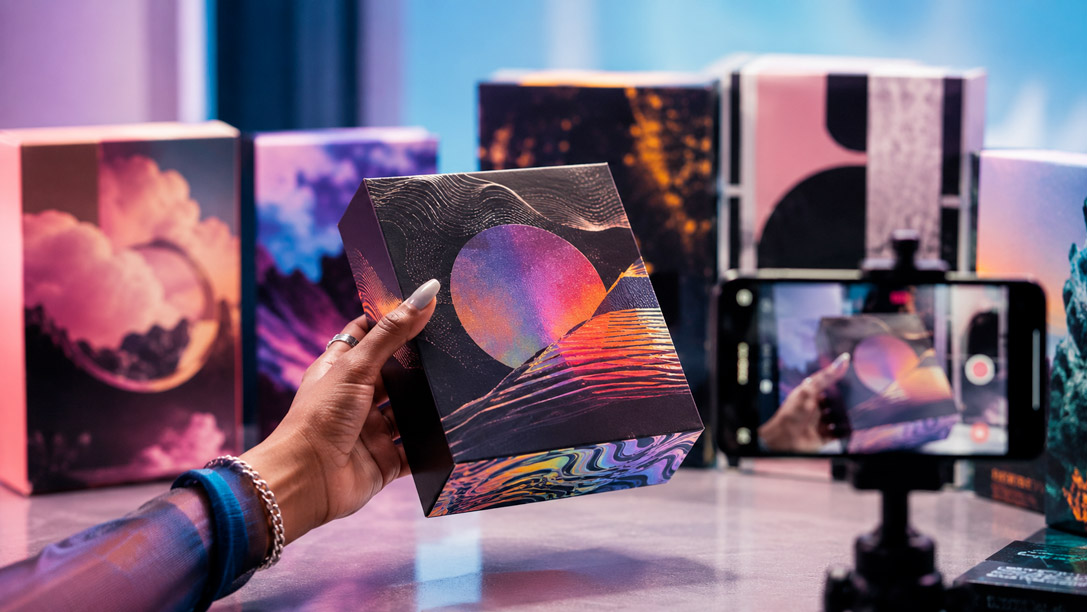
Limited-edition packaging was once primarily associated with seasonal campaigns, holiday collections or occasional promotional activations. Today, however, it is evolving into something much broader and much more strategic.
Across food, beauty, beverages and direct-to-consumer retail, brands are increasingly redesigning packaging at a much faster pace, introducing short-run editions, creator collaborations and highly reactive visual identities designed to generate online engagement and cultural relevance.
In this new landscape, packaging is no longer functioning solely as a protective layer or a recognisable branding system. Increasingly, it is becoming part of the content economy itself.
The shift reflects a broader transformation in consumer culture, particularly among younger audiences shaped by TikTok, Instagram and creator-driven retail trends. Products are no longer expected to remain visually static for years at a time. Instead, consumers increasingly respond to novelty, collectability and packaging experiences that feel temporary, exclusive and socially shareable.
As a result, packaging is beginning to operate more like digital content: continuously refreshed, culturally reactive and designed to capture attention within short engagement cycles.
Packaging moves from consistency to constant reinvention
For decades, one of packaging’s core objectives was consistency. Brands invested heavily in creating packaging systems that remained visually stable across markets and product generations, reinforcing familiarity and long-term shelf recognition.
Today, that logic is beginning to shift.
Limited-edition drops, artist collaborations and personalised packaging formats are introducing a new model where constant visual reinvention becomes part of brand strategy. In some sectors, packaging changes now occur almost as frequently as digital marketing campaigns.
This is particularly visible in categories strongly influenced by social media culture, including beauty, snacks, beverages and collectibles, where packaging increasingly functions as a tool for visibility and online interaction rather than simply retail identification.
The rise of mystery-box culture and collectible-driven retail models has further accelerated this transformation, pushing brands to design packaging that generates anticipation, emotional engagement and unboxing appeal.
Social media is accelerating packaging turnover
One of the most significant drivers behind this evolution is the growing relationship between packaging and digital visibility.
Packaging is no longer experienced only at the point of purchase. Increasingly, it is designed to be photographed, filmed and shared online.
This changes how packaging creates value.
Highly visual packaging, limited-edition graphics and short-term collaborations are capable of generating engagement far beyond physical retail environments, extending product visibility through user-generated content and social sharing.
In this context, packaging is becoming increasingly intertwined with content production itself.
For brands, this creates pressure to move faster, launch more variations and continuously refresh packaging aesthetics in order to remain culturally relevant.
As a result, packaging cycles are becoming shorter and more dynamic much closer to the rhythms of digital media than traditional packaging development timelines.
Digital printing enables more agile packaging strategies
The rapid expansion of digital printing technologies is playing a major role in enabling this transition.
Unlike traditional printing systems designed for long, standardised production runs, digital workflows allow brands to produce smaller batches, multiple variations and localised packaging designs with greater speed and flexibility.
This makes it easier to align packaging with:
- creator collaborations
- trend-driven launches
- seasonal drops
- personalised campaigns
- region-specific activations.
For packaging manufacturers and converters, this evolution is driving growing demand for more agile production models capable of supporting shorter development cycles and increased SKU variation.
At the same time, the rise of packaging personalisation is beginning to blur the boundaries between packaging production, marketing and digital engagement.
Packaging becomes part of cultural relevance
One of the most interesting aspects of this trend is how it changes the strategic role of packaging itself.
Traditionally, packaging was designed to create long-term recognition and stability. Increasingly, however, brands are using packaging to signal immediacy, exclusivity and cultural participation.
In some cases, the packaging may even become more socially visible than the product it contains.
This reflects a broader shift in consumer behaviour where ownership is increasingly connected to identity, online visibility and participation in communities built around trends, drops and collectibles.
For the packaging industry, this may redefine how packaging performance is evaluated in the future.
Protection, sustainability and efficiency will remain critical. But emotional engagement, shareability and cultural responsiveness are becoming increasingly important forms of packaging value as well.
Sustainable packaging can also reshape the brand narrative
There is another dimension to this shift that makes packaging even more strategically relevant: sustainability. If packaging is becoming part of the content economy, sustainable packaging can become one of the most powerful narrative tools available to a brand.
This does not mean simply adding environmental claims to a pack. In fact, vague sustainability messaging is becoming increasingly risky as consumers, regulators and retailers demand more evidence behind environmental statements. The real opportunity lies elsewhere: in using packaging design to make a brand’s values visible, tangible and easy to understand.
Some brands have already shown how this works. Lush has turned package-free products into a core part of its identity, making the absence of packaging itself a recognisable brand signal. Refillable deodorant models, from mass-market examples such as Dove to digital-first brands such as Wild, have transformed a disposable personal care format into a reusable object that consumers keep, personalise and interact with over time. Notpla, meanwhile, shows how material innovation can become part of the story, with seaweed-based packaging designed to disappear after use rather than remain as waste.
These examples suggest that sustainable packaging can do more than reduce environmental impact. It can change the emotional meaning of a product. A refillable pack can make a brand feel more durable and responsible. A packaging-free product can signal radical simplicity. A bio-based or compostable material can turn the package itself into proof of innovation.
This is where sustainability and the content economy begin to overlap. Packaging is no longer just a surface for communication. It becomes the message. For brands, adopting a more sustainable packaging solution can therefore become a way to rewrite their own narrative: from consumption to participation, from disposability to continuity, from visual novelty to visible responsibility.
The challenge is credibility. Sustainable packaging only becomes meaningful content when the environmental benefit is specific, understandable and supported by real design choices. Otherwise, it risks becoming another short-lived claim in an already crowded attention economy.
Packaging enters the content economy
The rise of limited-edition and highly dynamic packaging suggests that the industry is entering a new phase where packaging behaves less like a fixed industrial asset and more like continuously evolving media.
As brands compete for attention in increasingly fragmented digital environments, packaging is becoming part of storytelling, entertainment and online engagement strategies.
In this sense, the packaging industry may be moving toward a future where packaging is not only designed to contain products, but also to generate conversation, interaction and content.
The result is a profound shift in how packaging is understood: not simply as a container, but as an active participant in the attention economy itself.