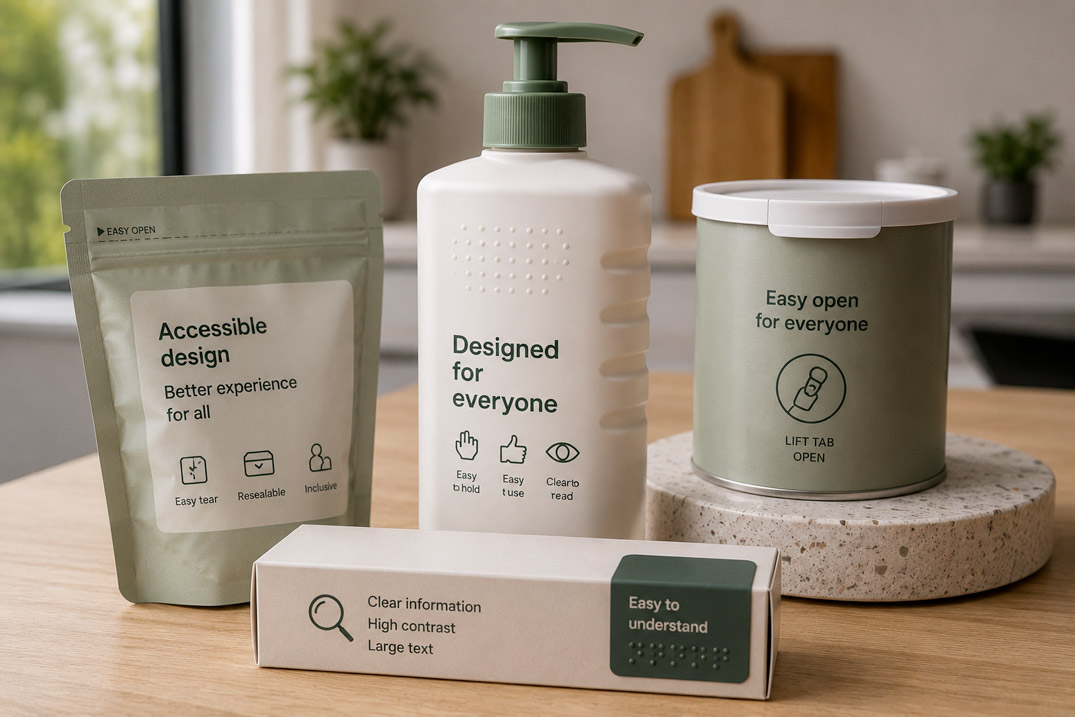
A package that cannot be opened or handled easily is more than a frustration. For millions of consumers, it is a reminder that packaging is still not designed for everyone.
Packaging innovation has long centred on three priorities: protection, branding and efficiency. Sustainability has since joined that list as the industry’s dominant focus, driving the development of recyclable materials, refill systems and lightweight formats.
But a sharper question is now surfacing across the sector: who is packaging actually designed for?
For millions of people, everyday packaging remains unexpectedly difficult to use. Opening a tightly sealed food container, peeling a flexible film, dispensing a cosmetic product or reading small typography can frustrate anyone living with reduced dexterity, visual impairments, neurological conditions or age-related physical limitations.
Populations are also aging rapidly. Demographic projections across Europe and other mature markets point to a significant rise in older consumers over the coming decades, pushing accessibility and usability closer to the centre of packaging design.
Packaging, in short, cannot simply be sustainable or visually appealing. It has to be usable by the widest possible range of people. Inclusive packaging is shifting from a niche design consideration to a strategic challenge for the industry.
The packaging industry has historically designed for the “average” consumer
Modern packaging has long been shaped by manufacturing efficiency, logistics optimisation and retail impact.
In practice, this meant designing for an assumed average consumer: someone with full dexterity, strong grip, unimpaired vision and easy familiarity with conventional packaging systems. Real consumers are far more diverse.
Accessibility challenges can affect:
- elderly consumers
- people with arthritis or reduced mobility
- visually impaired individuals
- neurodivergent consumers
- people recovering from injuries
- consumers with temporary physical limitations.
What makes this significant is that inclusive packaging benefits far more people than disability statistics alone might suggest. Struggling to open a jar, reseal a food pouch or understand instructions is a daily annoyance for a much wider share of the population than many brands realise.
Inclusive packaging is becoming part of a broader shift toward human-centred design.
Sustainability and accessibility are beginning to collide
One of the most complex challenges facing the industry is the growing tension between sustainability goals and packaging usability.
Packaging has become lighter, thinner and more material-efficient. Brands have introduced mono-material structures, refill systems, paper-based alternatives and tighter closures designed to cut waste and improve recyclability.
These changes support circular economy objectives, but they can unintentionally erode ease of use.
In food packaging, lightweight lids and rigid seals can demand more grip strength to open. Flexible structures may not tear cleanly, particularly for older consumers. In cosmetics and personal care, refill systems can improve sustainability metrics while creating more complicated user interactions.
The question for designers is becoming harder to avoid: can packaging really be considered sustainable if large groups of consumers struggle to use it?
The issue is sharpening as governments and regulators place greater weight on both sustainability and social inclusion. Future packaging innovation may have to balance two priorities that do not always align easily: environmental optimisation and universal usability.
Food and beauty packaging are under growing pressure
The accessibility debate is most visible in food and cosmetics, where packaging interaction is frequent and highly tactile.
Food packaging routinely confronts consumers with:
- difficult pull-tabs
- rigid vacuum seals
- hard-to-open jars
- packaging that demands excessive hand strength.
For elderly consumers and people living with arthritis, these formats create daily frustration and chip away at independence.
The beauty and personal care industry, meanwhile, is moving steadily toward refillable and minimalist packaging systems as part of its sustainability commitments. The results are aesthetically appealing and environmentally beneficial, but they sometimes prioritise minimalism over ergonomic functionality. Small caps, smooth surfaces, low-contrast typography and intricate dispensing systems can become barriers for consumers with visual or motor impairments.
Brands now face a broader challenge: how to make packaging that is premium, sustainable and intuitive at the same time.
Inclusive packaging goes beyond physical accessibility
The conversation around inclusive packaging is also widening beyond physical usability. Cognitive accessibility and clarity of communication are drawing more attention.
Complex instructions, visual clutter and unclear labelling can create difficulties for neurodivergent consumers and individuals with cognitive impairments. Brands are starting to rethink how information sits on packaging, focusing on:
- clearer hierarchy
- improved readability
- simplified instructions
- intuitive user interaction.
Typography, colour contrast and tactile cues are increasingly recognised as core components of packaging accessibility.
Inclusive packaging is no longer just about easy-open systems. It is part of a broader reconsideration of how consumers interact with products: emotionally, physically and cognitively.
Accessibility is becoming part of packaging innovation
As awareness grows, inclusive design is being built directly into packaging innovation strategies.
Brands and manufacturers are exploring solutions such as:
- ergonomic closures
- tactile markers for visually impaired consumers
- high-contrast typography
- improved grip surfaces
- accessible dispensing systems
- connected packaging technologies.
Digital tools may also play a larger role. QR codes, audio-enabled packaging and smart labels could improve accessibility by delivering product information in more flexible formats.
Inclusive packaging is gaining commercial weight as well. Consumers pay closer attention to how brands handle inclusion, accessibility and user experience. Packaging that feels frustrating or exclusionary can damage brand perception, particularly among ageing populations and younger consumers who expect companies to embrace inclusive design principles.
For brands, accessibility is no longer only a design issue. It is a question of reputation and consumer trust.
Why inclusive packaging may become the industry’s next major transformation
The packaging industry is entering a phase in which sustainability alone may no longer define successful innovation.
Recyclability, circularity and material reduction remain critical. But the next evolution of packaging design may involve creating systems that are environmentally responsible and genuinely usable by everyone.
This is a broader cultural shift in how packaging is understood.
Packaging is no longer simply a protective layer or a branding surface. It is a daily interface between products and people.
For designers, converters and brand owners, that means rethinking performance through a more human-centred lens: one that weighs accessibility, dignity and independence alongside sustainability targets.
Because in the end, the most successful packaging of the future may not be the lightest or the most recyclable. It may be the packaging that everyone can actually use.