Anti-counterfeit features are moving from being a ‘nice-to-have’ to a budget priority. Fresh projections suggest that the global anti-counterfeit cosmetic packaging market could grow from approximately US$37.06 billion in 2024 to around US$87.73 billion by 2034. This implies a compound annual growth rate (CAGR) of ~9% over the period 2025–2034, which is roughly twice the expected growth rate for cosmetic packaging overall.
That gap matters. The wider cosmetics packaging market is forecast to grow from US$37.79 billion in 2025 to US$58.68 billion by 2035 (a 4.5% CAGR), driven by the trend towards premium products, refillable packaging and digital beauty channels. However, the same forces that are pushing beauty sales online and globalising supply chains are also creating more opportunities for counterfeit products, particularly in categories with high unit values, such as fragrances and skincare “hero” products, which are frequently given as gifts.
Market analysts who group cosmetics together with pharmaceuticals are pointing in the same direction: researches estimate the global anti-counterfeit pharmaceutical and cosmetic packaging market to be worth US$102.45 billion in 2024 and projects an 8.65% CAGR up to 2030, while MarketsandMarkets forecasts it to reach US$195 billion by 2030, up from US$96.3 billion in 2025 (a 15.17% CAGR). Despite different scopes and assumptions, the message is the same: security spending is accelerating faster than packaging volumes.
Europe offers a snapshot of the situation. EUIPO estimates that, on average, counterfeiting caused around €3 billion in lost cosmetics sales in the EU between 2018 and 2021 (4.8% of total sales), affecting roughly 32,000 jobs linked to legitimate activity. At a more general level, the OECD and EUIPO estimate that counterfeit and pirated goods accounted for up to 2.3% of global trade and up to 4.7% of EU imports in 2021. Enforcement numbers also remain high: a European Commission update on detentions in 2024 reports the interception of around 112 million counterfeit items in the EU, with an estimated retail value of €3.8 billion.
So, what will ‘anti-counterfeit packaging’ in the cosmetics industry look like over the next decade?
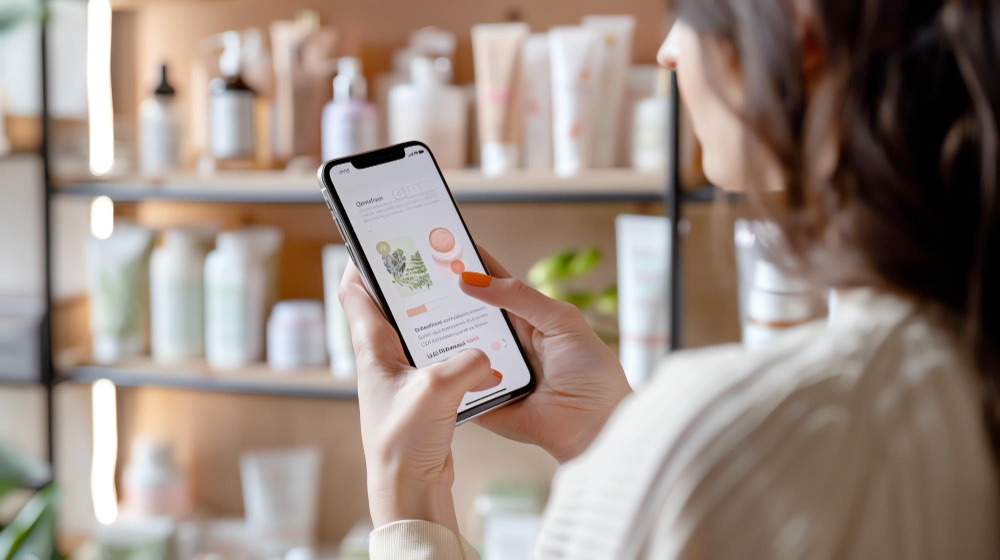
- Digital authentication is set to become mainstream: This will involve QR/DataMatrix codes that link to brand-controlled verification pages, as well as NFC/RFID technology for higher-value SKUs and omnichannel loyalty programmes.
- Track and trace will move closer to the unit level, with serialisation and aggregation being used to spot diversion, grey markets, and parallel imports.
- Tamper-evident packaging will become more sophisticated, with seals and closures that indicate the first opening without damaging the appearance of the packaging.
- Meanwhile, covert layers will grow quietly, with digital watermarks, forensic markers and speciality inks being used selectively to keep costs under control.
Another trend that is already influencing buying decisions is that brands want security without compromising recyclability or refillability. This favours solutions that add data and traceability (digital layers) rather than material complexity, and that can be applied at industrial speed (e.g. inline printing, laser marking and smart labels) with minimal changes to filling lines.If the projections are correct, anti-counterfeiting measures will be one of the fastest-growing ‘invisible’ upgrades in beauty packaging, driven as much by the risks of e-commerce as by consumer trust.