
From brown boxes to smart, sustainable packaging: the cardboard sector is undergoing a significant transformation. The convergence of environmental regulations and the exponential rise of e-commerce is pushing manufacturers, retailers, and logistics players to rethink one of the oldest forms of packaging. And it’s not just a matter of material—what’s changing is the entire system of how boxes are designed, produced, and delivered.
The sustainability challenge: less waste, fewer emissions
Corrugated cardboard has long been considered a sustainable solution compared to plastic—it’s recyclable, biodegradable, and widely collected in most waste management systems. But in 2024, that’s no longer enough.
The pressure from consumers, institutions, and regulators is growing. In the EU, the Packaging and Packaging Waste Regulation (PPWR) sets ambitious targets for reuse, recyclability, and reduction of excess packaging. In the U.S., Extended Producer Responsibility (EPR) laws are gaining traction in states like California, requiring companies to take accountability for the lifecycle of their packaging.
Retailers are responding. Amazon, which ships over 7 billion packages per year, has reported a 41% reduction in per-shipment packaging weight, eliminating more than 2 million tons of packaging materials since 2015—equivalent to over 1.5 billion avoided boxes.
These efforts are not just about corporate responsibility—they reflect the direct link between sustainability and operational efficiency.
The e-commerce effect: the box becomes a brand ambassador
Online shopping has profoundly changed the role of the cardboard box. Once an invisible logistic tool, the box is now the first—and sometimes only—physical point of contact between a brand and its customer.
This has redefined expectations in three key areas:
- Branding and personalization: Boxes are becoming tools for storytelling and customer experience.
- Durability: Packaging must withstand complex, multi-stage delivery chains.
- Right-sizing: Oversized boxes are no longer acceptable—consumers expect efficiency and minimal waste.
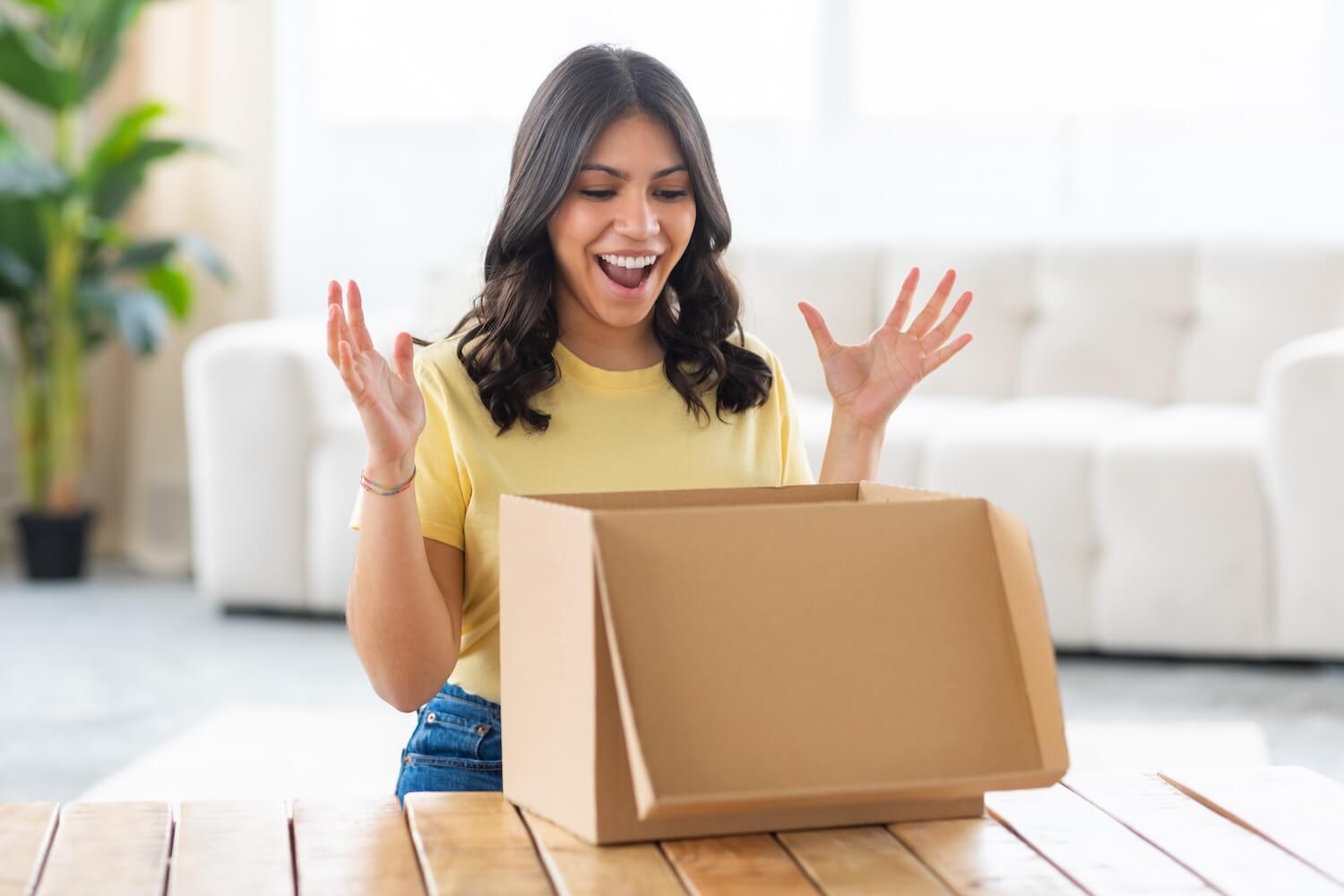
But there’s more. The rise of the unboxing trend—where users share the experience of opening a package on platforms like TikTok and Instagram—has turned packaging into a social media event. According to nss magazine, the concept of unboxing has evolved into a ritual of expectation and emotional engagement, especially in the fashion and beauty sectors. The box becomes a stage where the brand performs.
Good practices: from on-demand to circular systems
In this new context, companies like Packsize are leading the way with right-sized, on-demand packaging systems. By producing custom-sized boxes directly at the fulfillment center, Packsize solutions reduce corrugated material usage by up to 30% and CO₂ emissions by 26%. (More at: https://www.packsize.com/solutions/sustainability).
Another key player in sustainable packaging innovation is Smurfit Kappa. With operations in over 30 countries, the group integrates circularity across its entire value chain. Their approach is based on a Closed Loop System, where boxes are designed using renewable, responsibly sourced fibers, collected after use, and recycled into new packaging in just 14 days. In 2023, Smurfit Kappa reported that 81% of their packaging solutions are chain-of-custody certified, and that they achieved a 43.9% reduction in CO₂ emissions since 2005, getting closer to their net-zero goal by 2050. (More at: https://www.smurfitkappa.com/sustainability).
This model not only addresses environmental concerns but also offers brands reliable, traceable packaging solutions that align with regulatory trends and consumer expectations.
Cardboard packaging in Europe: a growing sector
The corrugated cardboard sector in Europe continues to show strong momentum. According to the Spanish Association of Corrugated Cardboard Packaging Manufacturers (AFCO), Europe’s top three producers are Germany, Italy and Spain, with the latter consolidating its position as the third-largest producer thanks to sustained demand in agriculture and e-commerce.
Production in 2023 reached nearly 6 billion square meters in Spain alone, demonstrating the growing strategic importance of this material. Across the continent, manufacturers are investing in sustainable materials, digital printing, and logistics optimization to meet both environmental goals and growing market demand.
Smart factories: automation and flexibility in cardboard boxes manufacturing
Technological innovation is changing how cardboard packaging is made. Modern production lines now integrate smart systems that adjust on the fly to various box sizes, optimize material usage, and reduce downtime. Automated case formers and packers are becoming essential tools in reducing waste, improving consistency, and scaling packaging operations efficiently. When paired with real-time logistics data, these systems help brands adapt packaging in response to demand fluctuations—without compromising on performance or sustainability.
The cardboard box as a strategic asset
Sustainability and e-commerce are rewriting the rules of cardboard packaging. From smarter machines to right-sized boxes, from circular materials to viral unboxing trends, the humble brown box is evolving into a brand touchpoint and a pillar of supply chain strategy.
In this new landscape, cardboard packaging is no longer a commodity—it’s a strategic interface between product and consumer. Brands that understand this shift and invest accordingly will not only reduce their environmental footprint, but also unlock new value in customer experience and operational efficiency.

