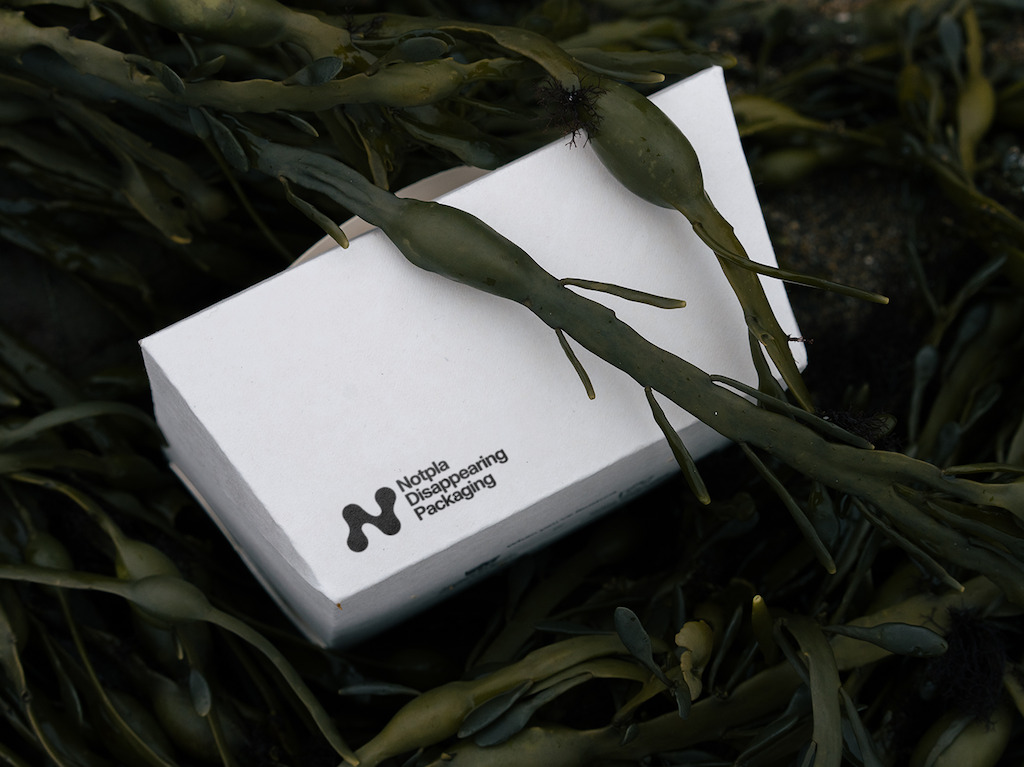
A sandwich lasts a few hours. Its wrapper, too often, can linger in the environment for years. Notpla (“not plastic”), the London-based startup, is built on that mismatch and on a simple but radical idea: packaging should last only as long as it’s needed, then safely return to nature. The company develops fibre-based food packaging with a 100% natural seaweed-derived coating, designed to replace the fossil-based barriers commonly used to make paper packs grease- and water-resistant.
Notpla’s breakthrough moment on the global stage came with the Earthshot Prize 2022, the environmental award founded by Prince William. In interviews reported by Reuters (and picked up by Geo.tv), co-founder and co-CEO Rodrigo Garcia said the win significantly boosted awareness and credibility, helping the company attract partners and customers, and supporting adoption in UK stadiums where high-volume foodservice makes “single-use” a daily reality. The symbolic power of William’s sustainability-focused public appearances, such as speaking from a food truck, signals something bigger: the fight against disposable packaging has become mainstream, and it’s being tested first in the toughest settings on-the-go food.
But the story isn’t just about headlines. Notpla traces back to 2014 and to Ooho, its seaweed-based edible capsule designed to contain liquids: an alternative concept for sachets and small-format single-use items, from sauces to sports nutrition. From there, the company’s industrial leap was to focus on the “invisible layer”: the barrier coating that makes paper and board functional for food. That layer is often the reason packaging becomes hard to recycle or separate at the end of life. By replacing it with a seaweed-based material, Notpla aims to keep performance while removing a major source of complexity downstream.
Scale is central to the pitch. Garcia has stated that Notpla has already replaced tens of millions of plastic units and is targeting one billion replaced units by 2030. The go-to-market strategy reflects where disposable waste concentrates: major venues, catering operations, and high-footfall public locations. Coverage in outlets such as Euronews has highlighted the expansion of seaweed-coated food boxes across stadiums and public spaces and the ambition not to remain a niche “eco brand,” but to offer a mainstream alternative that can hold up in real operational conditions.
There’s also a return-to-roots detail that matters beyond symbolism: Notpla packaging has been rolled out at Imperial College London, where the founders first met as students, as part of campus efforts to reduce single-use plastic waste. Student and institutional communications have referenced Notpla among the startups contributing sustainable packaging solutions across multiple Imperial campuses, turning the university environment into a living testbed for adoption at scale.
For packaging professionals, the takeaway is straightforward: “plastic-free” only becomes credible when it performs on barrier properties, speed of service, supply chain reliability, and end-of-life outcomes. If a food pack can truly “disappear” like a peel, then the industry question is no longer whether change is coming, but how quickly it can be delivered without compromises at industrial scale.
Image Credits: Notpla