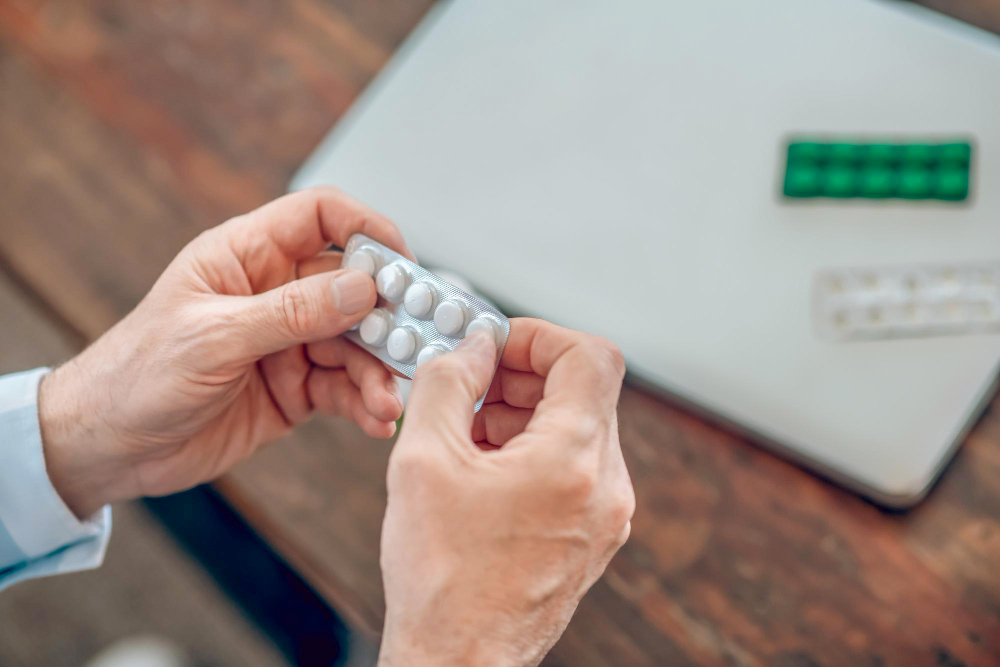
Connected blister packs can record when individual doses are removed, send reminders and generate detailed adherence data. But making medication use measurable is not necessarily the same as improving patient behaviour.
Medication packaging has traditionally been designed around three core responsibilities: protecting the product, preserving its stability and ensuring that the correct information reaches the patient. Smart blister packs introduce a fourth function: monitoring how the medicine is used.
Using printed electronics, connected sensors and Bluetooth communication, these packs can record the date and time at which an individual tablet is removed. The information may then be transferred to an application that displays dosing history, issues reminders or makes the data available to healthcare professionals and caregivers. Packaging is therefore no longer simply carrying the treatment. It is beginning to participate in its management.
This development responds to a genuine healthcare problem. OECD (Organisation for Economic Co-operation and Development) estimates, suggest that around half of medicines that are prescribed, purchased or dispensed are not taken appropriately. At the same time, treatment regimes are becoming increasingly complex. Across 15 OECD countries, around half of people aged 75 and over take at least five medicines concurrently, creating more opportunities for doses to be forgotten, confused or taken at the wrong time.
The case for smarter pharmaceutical packaging therefore appears compelling. But can a connected blister really improve adherence, or does it simply provide a more sophisticated way of observing it?
Why Medication Adherence Is Also a Packaging Challenge
Medication non-adherence is often treated primarily as a behavioural problem. Patients may forget a dose, discontinue treatment when symptoms improve, worry about side effects or decide that the medicine is not working. Financial barriers, limited health literacy and poor communication with healthcare providers can also influence whether a treatment is followed correctly.
Packaging cannot solve all of these issues. It cannot make a medicine more affordable, remove unwanted side effects or persuade a sceptical patient that a treatment is necessary. It can, however, reduce some forms of unintentional non-adherence.
A pack organised by day and dose can make a complex regimen easier to understand. Clear visual information can help patients see whether a tablet has already been taken. Digital reminders can intervene when a scheduled dose is missed. For patients managing several medicines, these apparently simple functions may reduce uncertainty and help establish a repeatable routine.
Evidence from conventional reminder packaging suggests that design can influence behaviour, although results are far from universal. A systematic review of 30 studies found a statistically significant improvement in at least one adherence measure in 17 of them, equivalent to 57%. The researchers nevertheless identified important methodological weaknesses and concluded that stronger evidence was needed to determine which packaging features work, for whom and under what circumstances.
Smart blister packs build on the same principle but add a layer of measurement and connectivity. This could make them more useful than a printed calendar pack, but it also makes the relationship between packaging and adherence more complicated.
How Smart Blister Packs Monitor Medication Use
A smart blister typically contains conductive tracks or an electronic layer capable of detecting when the foil covering a cavity is broken. Each removal event can be time-stamped and stored electronically. Depending on the system, the data may be transferred to an app or adherence platform, where the patient can view previous doses and receive notifications.
For healthcare providers, this creates a much more detailed history than a patient’s recollection or a pill count performed at the end of a treatment period. Instead of knowing only how many tablets remain, the system can indicate whether the pack was opened at approximately the prescribed times.
That distinction could be particularly valuable in clinical trials. Researchers need to know whether poor results are caused by an ineffective treatment or by inconsistent use of the study medication. Smart packaging can provide a chronological record without requiring patients to complete a manual diary after every dose.
The data can also support more targeted care. Rather than sending every patient the same reminders, a connected system could identify repeated missed doses, unusual timing patterns or a gradual decline in adherence. A pharmacist, caregiver or clinician could then intervene when support is actually needed.
The potential value therefore lies not only in reminding patients, but in making patterns of medication use visible.
Better Usability Does Not Automatically Mean Better Adherence
The most directly relevant evidence comes from a randomized controlled usability trial published in 2026. Thirty-six healthy adults were asked to simulate taking medication twice a day for eight weeks using a connected smart blister. One group used the pack with a mobile adherence application, while the control group used the blister without the app.
The application produced a clear improvement in usability. The median System Usability Scale score was 80 for participants using the app, compared with 67.5 for those using the blister alone. Users particularly valued reminders, visual dose tracking and the structure the system brought to the daily routine.
The adherence results, however, were less conclusive. Electronically measured adherence was 91.7% in the app group and 86.1% in the control group. Manual pill counts produced figures of 96.4% and 88% respectively. Although the app group performed better numerically, the differences were not statistically significant.
This does not mean the technology failed. The study was small, lasted only eight weeks and involved healthy volunteers taking placebo tablets rather than patients managing a real chronic condition. Adherence was also relatively high in both groups, leaving limited room for improvement.
It does, however, reveal an important distinction for packaging developers. A system can be easy to use, positively received and technically capable of recording dosing events without necessarily producing a measurable change in behaviour.
Connectivity is a feature. Improved adherence is an outcome. The first does not guarantee the second.
Removing a Tablet Is Not the Same as Taking It
Smart blisters also face a fundamental measurement limitation: they record an interaction with the packaging, not the ingestion of the medicine itself. A patient may remove a tablet and decide not to take it, extract several doses in advance and transfer them to a pill organiser, or open a cavity accidentally. Technical failures or unexpected patterns of use can also create missing or misleading records.
Electronic blister data should therefore be understood as a proxy for medication-taking behaviour rather than direct proof of ingestion. This limitation is not unique to smart blisters, but applies more broadly to electronic adherence-monitoring systems that infer medication use from opening events.
Recent evidence illustrates both the value and the limitations of this approach. The 2026 study “Feasibility, acceptability and validity of electronic adherence monitoring among adolescents in Zimbabwe: a mixed methods study” by Dzavakwa et al. followed 97 adolescents using an electronic medication monitoring device for a median of 24 weeks. Among participants receiving vitamin D, median adherence was 100% when assessed by pill count, compared with 87% when measured electronically.
More importantly, electronically measured adherence was significantly associated with serum vitamin D levels, a biological marker that provided an independent indication of intake, whereas pill-count adherence was not. Electronic adherence explained 42% of the variation in vitamin D levels, compared with 10% for pill count.
The study also documented discrepancies that are highly relevant to smart packaging. Some participants opened the electronic device more often than the pill count suggested, while others opened it fewer times. Reported explanations included curiosity openings, removing tablets from the device in advance and misunderstanding how the monitoring system was intended to be used.
This does not mean that electronic monitoring provides a perfect representation of medication intake. Rather, it highlights how difficult adherence is to measure. Pill counts can indicate how many tablets have disappeared but provide little information about when they were taken, while self-reported adherence can be influenced by recall and social desirability bias. Electronic systems add valuable timing and behavioural data, but they still primarily capture an interaction with a package or device rather than directly observing ingestion.
Smart blister packs may therefore provide richer and potentially more reliable adherence data, particularly when dose timing matters, but those data still require clinical interpretation. The value of smart packaging lies not in proving that a medicine has been swallowed, but in providing a more detailed picture of medication-taking behaviour than conventional packaging can offer.
Where Could Smart Blister Packs Deliver the Most Value?
The strongest business case may not involve adding electronics to every pharmaceutical blister. For a simple, short course of treatment, the additional cost, complexity and material use could outweigh the benefit.
The technology is more likely to generate value where non-adherence has serious consequences or where medication routines are particularly difficult to manage. This could include long-term therapies, complex dosing schedules, medicines requiring precise timing, clinical trials and treatments involving older or vulnerable patients.
Smart blisters could also support situations in which early intervention matters. A single missed dose may not require action, but a repeated pattern could indicate confusion, side effects, declining motivation or a broader health problem. The package itself cannot determine the cause, yet it can provide a signal that prompts a conversation.
This is where the distinction between a standalone device and an integrated service becomes critical. A blister that simply records missed doses may generate data without generating value. A blister connected to an appropriate support pathway can turn that information into reminders, counselling, treatment reviews or caregiver involvement.
The packaging is most useful when someone, or some carefully designed system, is prepared to respond to what it detects.
Data, Privacy and Sustainability Cannot Be Secondary Questions
Once a blister begins collecting and transmitting information about medication use, it also becomes part of the digital healthcare infrastructure.
This raises practical questions that extend beyond traditional packaging development. Patients need to understand what information is being collected, where it is stored and who can access it. Manufacturers and healthcare providers must also consider how long data should be retained, how consent is managed and how the system responds when records are incomplete or technically unreliable.
The same technology may feel supportive to one patient and intrusive to another. A reminder can be reassuring when requested, but persistent monitoring may feel like surveillance when control over the data is unclear.
There is also a material trade-off. Pharmaceutical blisters are already challenging from a circularity perspective because they often combine plastic and aluminium layers. Adding conductive inks, sensors, electronic modules or communication components may increase functionality while making material recovery even more complicated.
The sustainability question should therefore not be reduced to whether a smart blister can theoretically be recycled. The wider assessment must consider additional materials, component separation, manufacturing impacts and the healthcare value generated during use.
In high-value applications, improved treatment management could justify greater packaging complexity. In low-risk or short-term treatments, the same design might represent unnecessary technological and material escalation. The correct solution will depend on the clinical context rather than on the availability of the technology alone.
Smart Packaging Needs a Clear Role in the Care System
Smart blister packs can make medication use easier to organise, more visible and more accurately timed. Early evidence also suggests that patients may find connected packs and companion applications helpful in establishing a routine.
What has not yet been demonstrated conclusively is that the packaging alone can produce a sustained improvement in adherence or better clinical outcomes across broad patient populations.
The most realistic role for smart blisters may therefore be neither that of a passive container nor an autonomous digital solution. They are better understood as an interface: a point at which the medicine, the patient and the wider care system can exchange information.
Their success will depend on more than sensor accuracy. The pack must be accessible, reliable, affordable and appropriate for the intended patient. Its data must lead to useful support rather than passive monitoring, while privacy and end-of-life design must be considered from the beginning.
Smart blister packs can contribute to better medication adherence. But the intelligence is not located only inside the packaging. It also lies in how the information is interpreted and in what happens after a dose is missed.