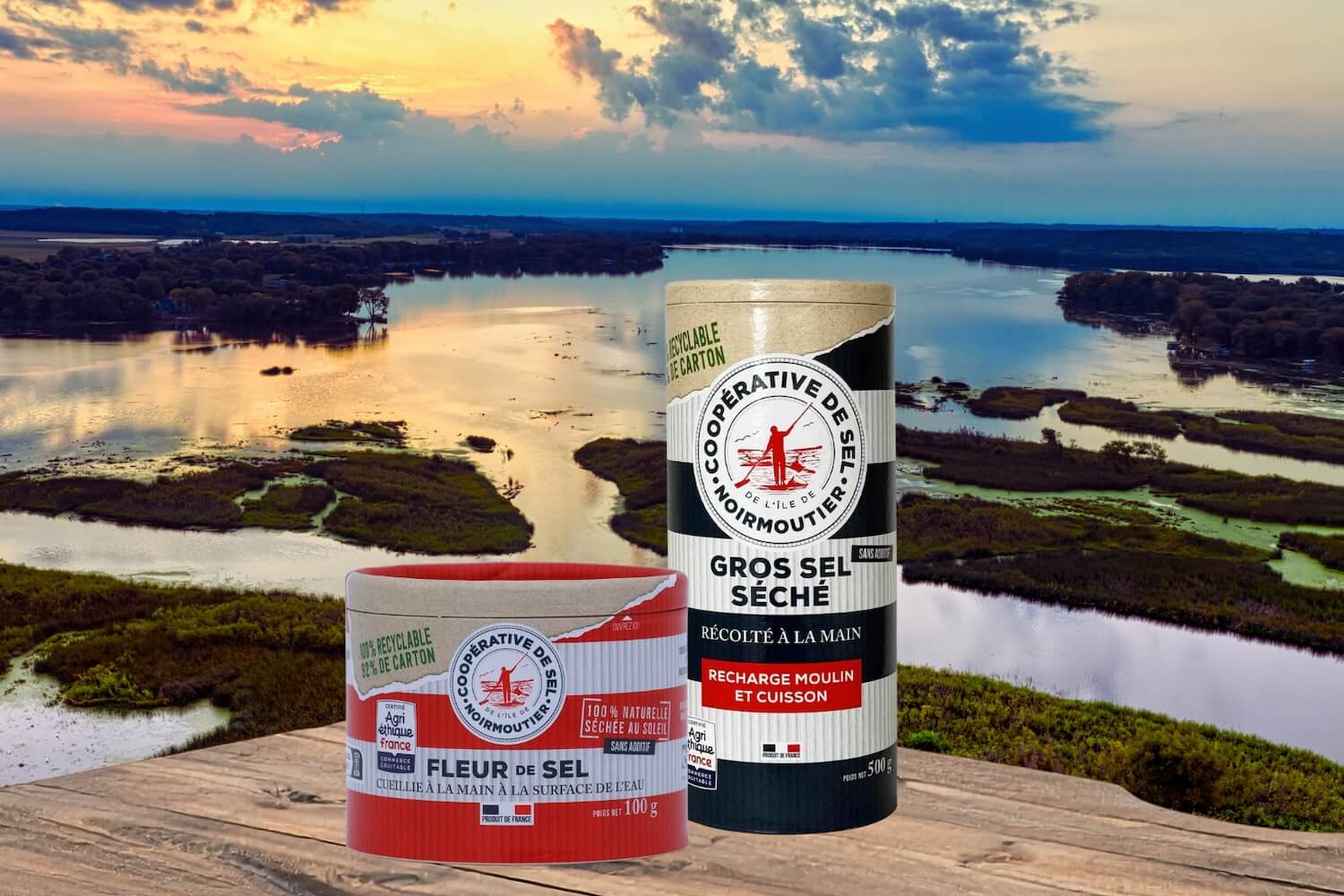
For heritage food brands, changing packaging can be a risky move, because very often it is the packaging itself that defines the brand’s identity on the shelf in the eyes of consumers, generation after generation. Yet many long-established brands have been embracing change in recent years, typically by retaining their heritage design while adopting new, more eco-friendly materials. This is especially true in Europe, where consumer awareness of sustainability is very strong and regulations encourage—if not mandate—change.
That is exactly the direction taken by the Noirmoutier Sea Salt Cooperative, which is transitioning its Agri-Éthique labelled sea salt range from a plastic sprinkler container to Sonoco’s paper-based GreenCan®.
Based on France’s Atlantic coast, where sea salt has been harvested by hand for centuries, the cooperative is framing the move as a question of coherence as much as packaging performance. As the company puts it, it is committed to “responsibility and coherence in every decision we make,” and saw the format change as a way to bring packaging into line with the values already attached to the product.

The switch is also explicitly tied to the changing regulatory landscape. In the words of Cooperative Director Joël Piau, “in anticipation of the upcoming PPWR regulation, we wanted to reduce plastic waste by adopting packaging that is more sustainable and genuinely circular.” That makes this project more than a simple material substitution: it is part of a broader strategy to future-proof the pack while strengthening its sustainability narrative.
From a technical standpoint, the case is notable because sea salt is not an easy product to pack. Its sensitivity to humidity means that any fibre-based alternative has to deliver real barrier performance, not just visual sustainability cues. GreenCan® contains up to 98% paper and includes renewable and recycled fibres. Piau underlines the functional challenge directly, noting that “for hygroscopic products such as sea salt, this balance between sustainability and protection is critical.”
The Noirmoutier project also lands at a time when paperisation is accelerating across the packaging sector. The press release cites Mintel data showing that product launches using paper-based packaging formats increased by more than 122% between 2023 and 2025, as brands across food, personal care and household categories intensify efforts to move away from plastic.

Sonoco places the move squarely within that wider shift. Seàn Cairns, President of Sonoco Consumer Packaging EMEA/APAC, says “several forces are driving this shift,” from consumer perceptions of paper packaging to PPWR preparedness and ongoing innovation in fibre-based design. He adds that advances in packaging technology are making it increasingly possible for paper formats to protect sensitive products while maintaining “product integrity and shelf appeal.” What makes this case especially relevant is that it combines several themes at once: premium food positioning, plastic reduction, paper-based innovation and regulatory anticipation.
Cairns describes it as an example of how “heritage food brands can rethink packaging as an integral part of their sustainability strategy,” aligning product values, consumer expectations and future requirements.
Noirmoutier Sea Salt project is a particularly symbolic packaging case history that will undoubtedly prepare the way for many other heritage food brands. And not just in France.
The challenge remains the same: striking the right balance between tradition, efficiency, and environmental sustainability. But Normandy salt has proven that it is possible to meet this challenge. Who will follow suit?